Sainsburys Centre Refurbishment

Menu

SUSTAINABILITY

BACKGROUND

For over 50 years, UEA researchers have been at the forefront of research into climate change, and the University is now a widely acclaimed global leader in climate change, biodiversity and sustainability research. With climate change and biodiversity loss topping the list of global risks, this on-going research is of vital importance. For climate change to be tackled, every organisation must act now and it is essential that the University applies its knowledge of the climate emergency to its own operations on campus and contributes appropriately and substantially to the Net Zero Carbon targets of the City of Norwich and the region.

SUSTAINABLE BUILDINGS AT UEA

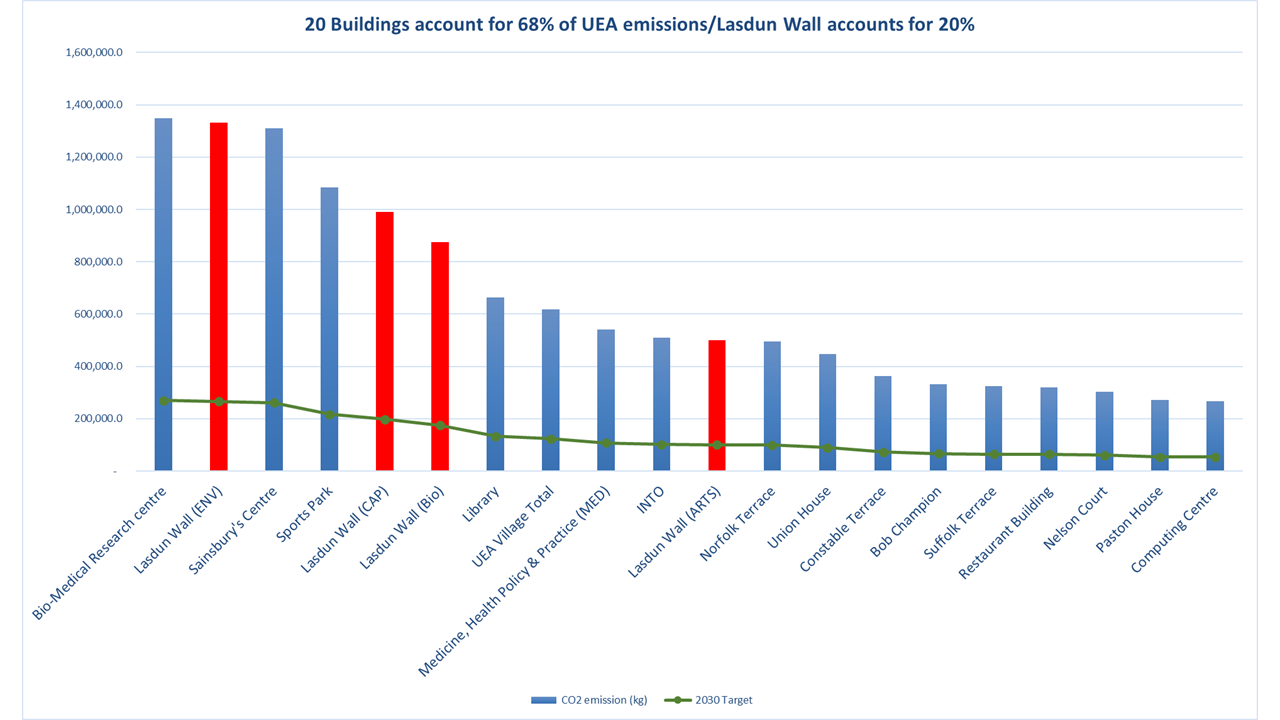
UEA is extremely proud of its achievements in creating and maintaining sustainable buildings, with Elizabeth Fry, the Zuckerman Institute for Connective Environmental Research (ZICER) and The Enterprise Centre providing outstanding examples of sustainable development and energy in use. Alongside these award-winning sustainable buildings, the campus has wonderful historic buildings that are not yet as thermally or energy efficient as they need to be. This includes the Lasdun Wall which currently accounts for 20% of the total campus emissions. The proposed refurbishment of the Lasdun Wall will enable essential improvements to be made to the building’s thermal performance which will in turn significantly reduce operational carbon. Without this work we could only achieve our net zero carbon targets by closing the building completely.

THERMAL PERFORMANCE OF THE LASDUN WALL

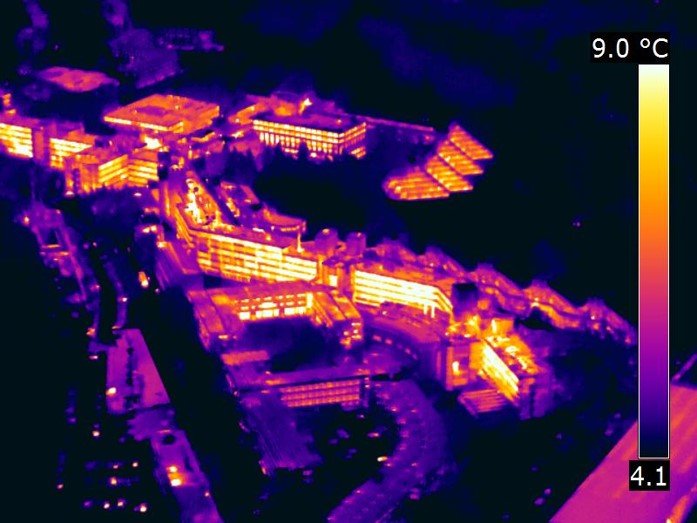
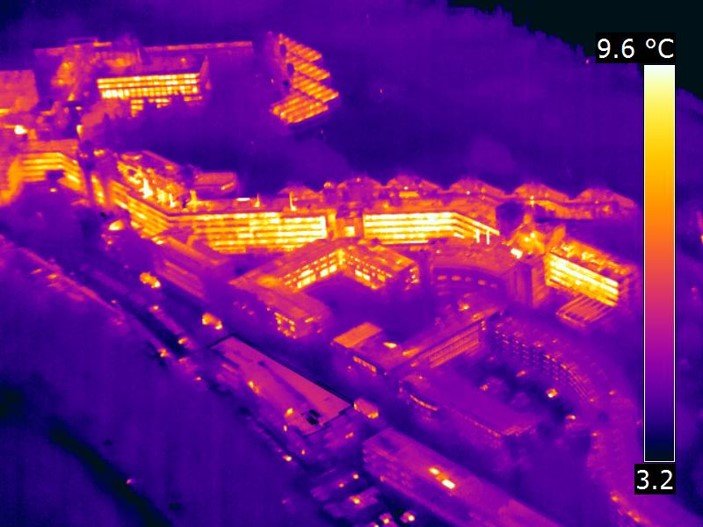
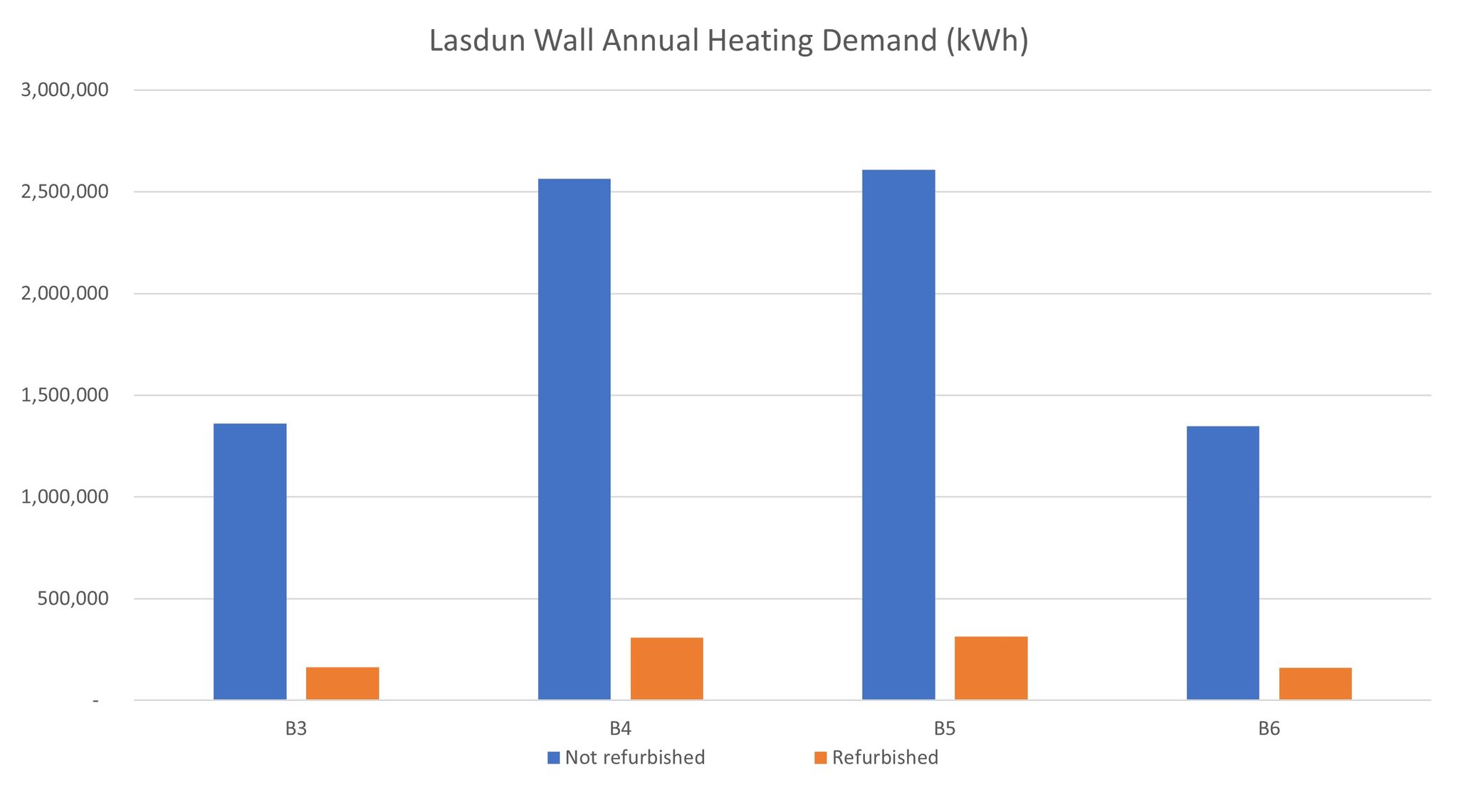
The thermal images below show the extent of the heat that is currently being lost through the poorly insulated façade of the Lasdun Wall. The proposals will enable the historic fabric of the spandrel panels to be retained whilst also achieving 85% improvement in thermal performance. The required improvement in thermal performance will be achieved through the application of insulation to the rear of the original panels and replacement of the single glazed windows with thermally efficient glazing carefully designed to resemble the original design. The refurbishment will also enable the future use of low and zero carbon technology and energy efficient services.


Thermal imaging from drone footage


ACHIEVING NET ZERO CARBON

UEA declared a climate and biodiversity emergency in June 2019, and has set clear targets for achieving an 80% reduction in operational carbon by 2030 and reaching Net Zero Carbon by 2045. The University has set targets which exceed the legal requirements which must be achieved by 2050 and has pledged not to rely on off-setting.

The charts below show the 2030 target against the current carbon emissions from campus buildings and the enormous reduction in heating demand that will be achieved by improving the thermal performance of the Lasdun Wall buildings by 85%.


 

CO2 Emissions graph


Annual heating demand of Lasdun Wall buildings graph


REDUCING MATERIAL CONSUMPTION AND EMBODIED CARBON

Every tonne of carbon in construction processes introduces more carbon that needs to be removed or offset. Retaining and refurbishing the Lasdun Wall will significantly reduce consumption of raw materials when compared with building new facilities. By enabling the Lasdun Wall to provide modern scientific research facilities and excellent learning spaces we will retain a high volume of already embedded carbon.


PHASE 1 SUSTAINABILITY TARGETS


ENERGY AND CARBON

85% improvement in thermal performance over baseline reducing operational energy and carbon. Use of low / zero carbon technology and energy efficient services. Embodied carbon reduction from retaining existing fabric.


BIODIVERISTY

The UEA’s 145-hectare campus supports over 5,700 species and is a substantial part of Norwich’s green infrastructure. The project will actively deliver a 10% Biodiversity Net Gain through campus-wide initiatives.


WASTE AND RESOURCES

The project will actively design out waste and implement a waste hierarchy to reduce construction and operational waste. The project will ensure responsible and sustainable choices in material selection.