Sainsburys Centre Refurbishment

Menu

BUILDING CONCEPT & MASSING

ORGANISATION OF SPACE

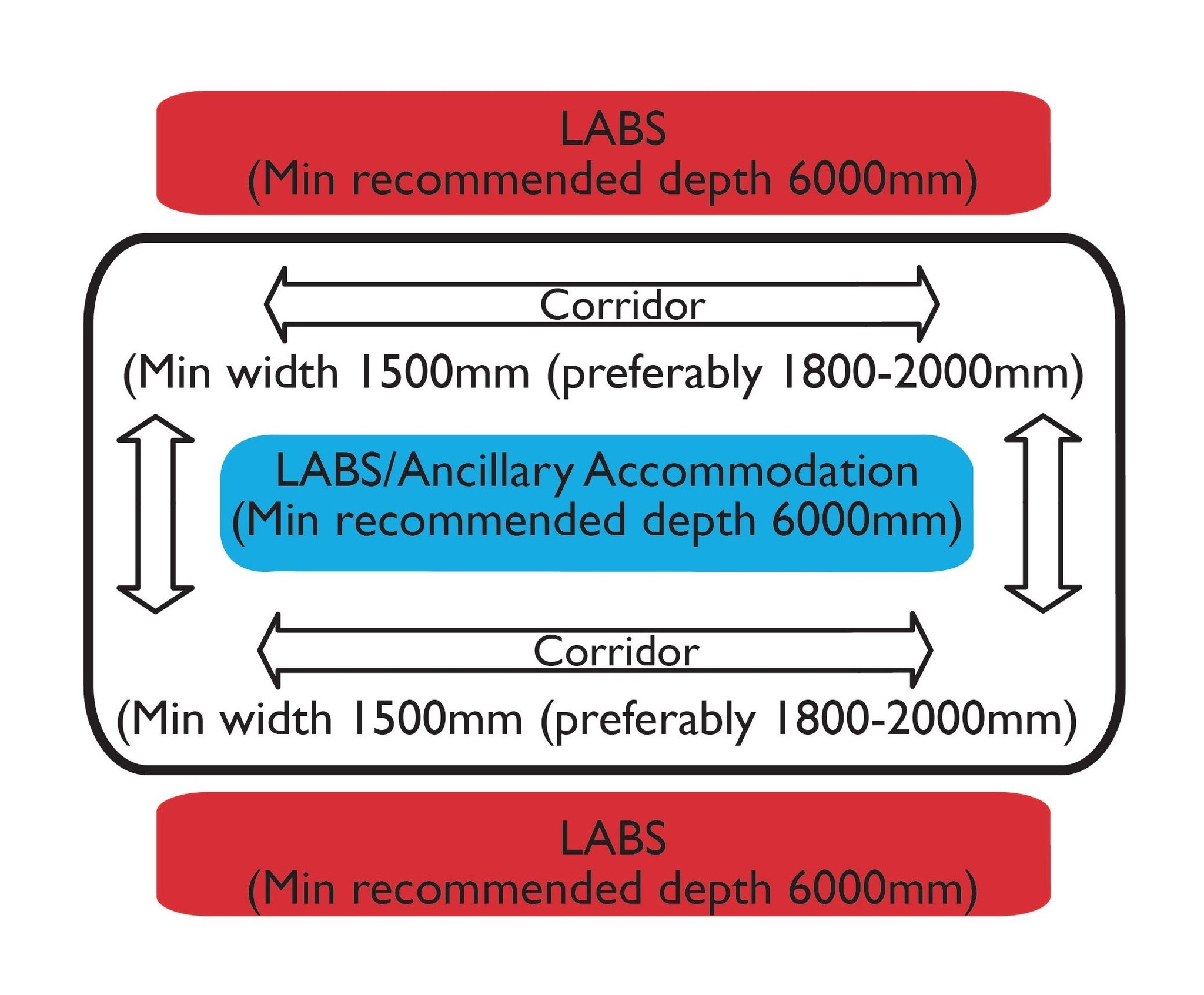
Modern science research design requires a 28m wide floor plate to create a plan form that is both flexible in meeting lab design requirements and capable of being adapted over time as science research develops. Larger labs than are currently provided in the Lasdun Wall are needed as research groups change regularly and small cellular labs are inflexible and restrictive. Separation of functions is increasingly important both for the effectiveness of lab work and for safety reasons. The diagram below shows how this arrangement allows for two corridors to separate different science functions providing a safer working environment, with naturally lit accommodation on either side and core space in the centre.

Modern Science Research plan form with a minimum recommended width of building 28m


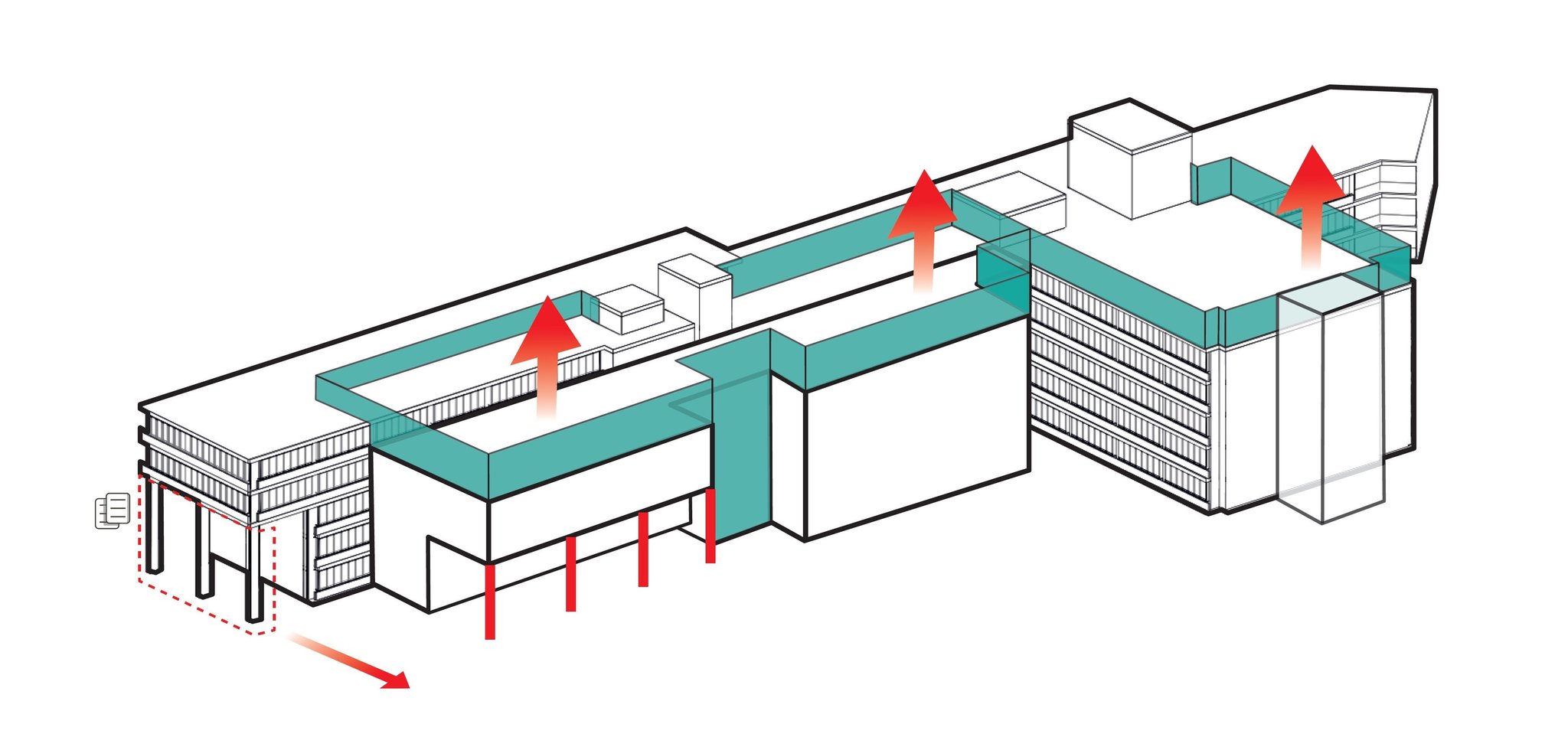
Rooftop plant is required as the existing floor to ceiling heights are too low to provide horizontal ductwork within the interior. As the plant needs to be at roof level, the design provides space for this on the north side of the building. This reduces the visual impact of the plant from the main campus and key views from the Broad. The elements coloured green are the roof top plant and the vertical ventilation strategy is shown with the arrows.

GROUND FLOOR CONNECTION

PLANT HORIZONTAL & VERTICAL SERVICE DISTRIBUTION


DRIVERS FOR THE PROPOSED EXTERNAL FORM

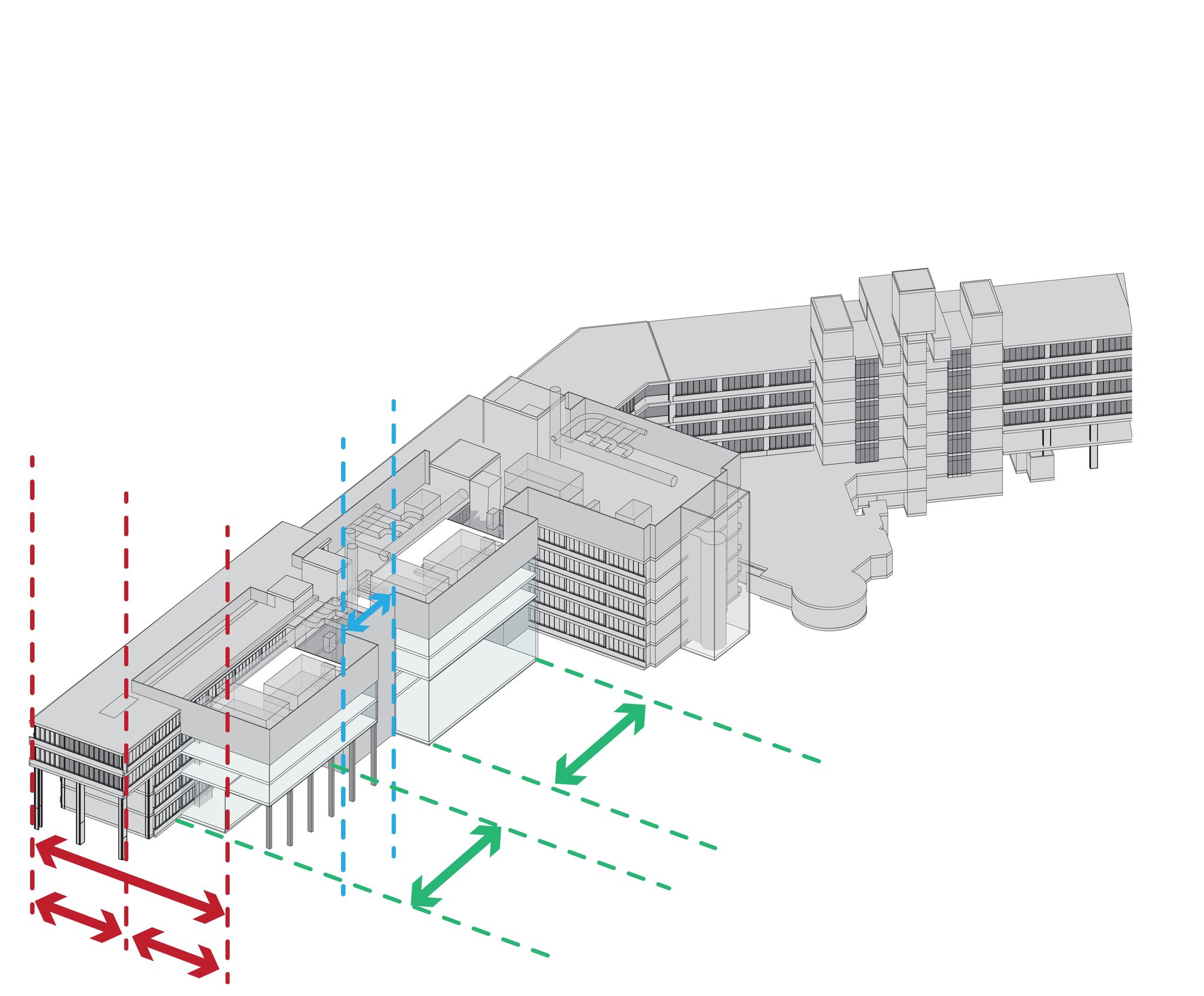
The diagram below shows how the existing building form is extended using two extension spurs:

  • The depth indicated by the red arrows shows how the extension takes the existing proportions to double the width of the building to accommodate flexible and adaptable lab planforms
  • The green arrows show how the proposal uses symmetry to form two spurs of equal size either side of the central vertical core
  • The existing central core width is indicated by the blue dash lines separating the two spurs

Creating spurs as opposed to a full length extension creates a similar architectural language to the existing Arts Spur and provides the following benefits in terms of form: 

  • The proposal pulls the extension massing back from the east end of the existing building. This allows the completed east end of Building to be appreciated in its original form
  • The proposal pulls back the extension from the junction where it meets the existing projecting spur. This solution allows more of the original form of the existing spur to be seen and provides a new ground floor service entrance in the space in between
  • The existing main building is divided by the existing concrete vertical service core containing the existing lift and stairs, this big vertical concrete form punctuates the horizontal form of the main building (an example of Lasdun’s use of strata as a design characteristic which we are seeking to respect and continue wherever possible)
  • The core is also a strong form in terms of heritage, as the vertical cores are part of Lasdun’s original concept. This form is retained and visible from the north between the two new spurs. The diagram below shows how this massing works in relation to the optimum laboratory planforms

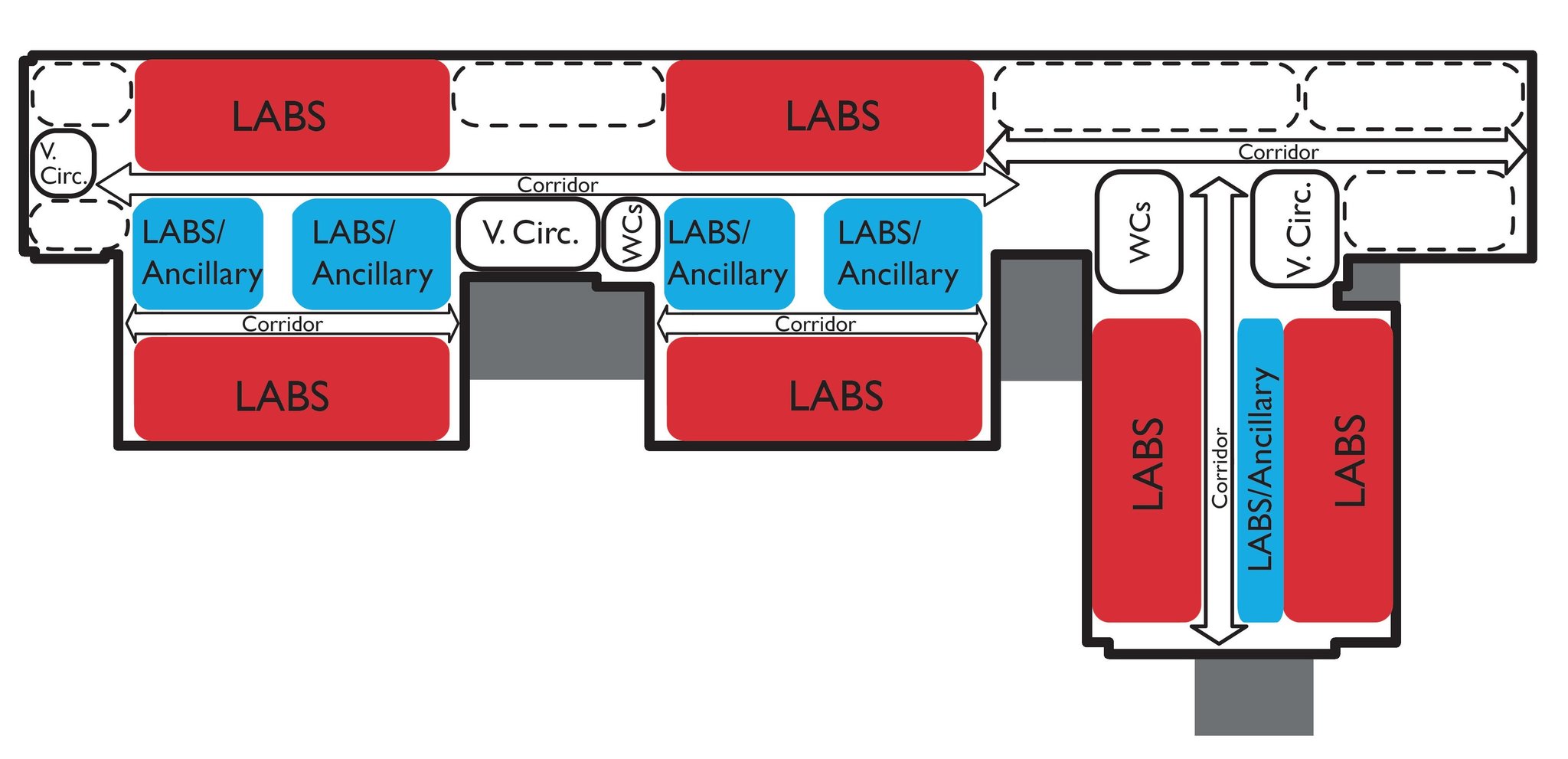
The red and blue diagram below shows how the proposed ‘spur’ extensions, combined with the existing floor plate, provide this 28m deep floor plate. Larger modular laboratories are shown in red and their support/ ancillary space shown in blue. The proposal utilises the existing floorplate which is 14m deep and provides two 14m deep extensions to create 28m deep modern flexible laboratory space. 


Modern Science Research plan form overlayed on proposal


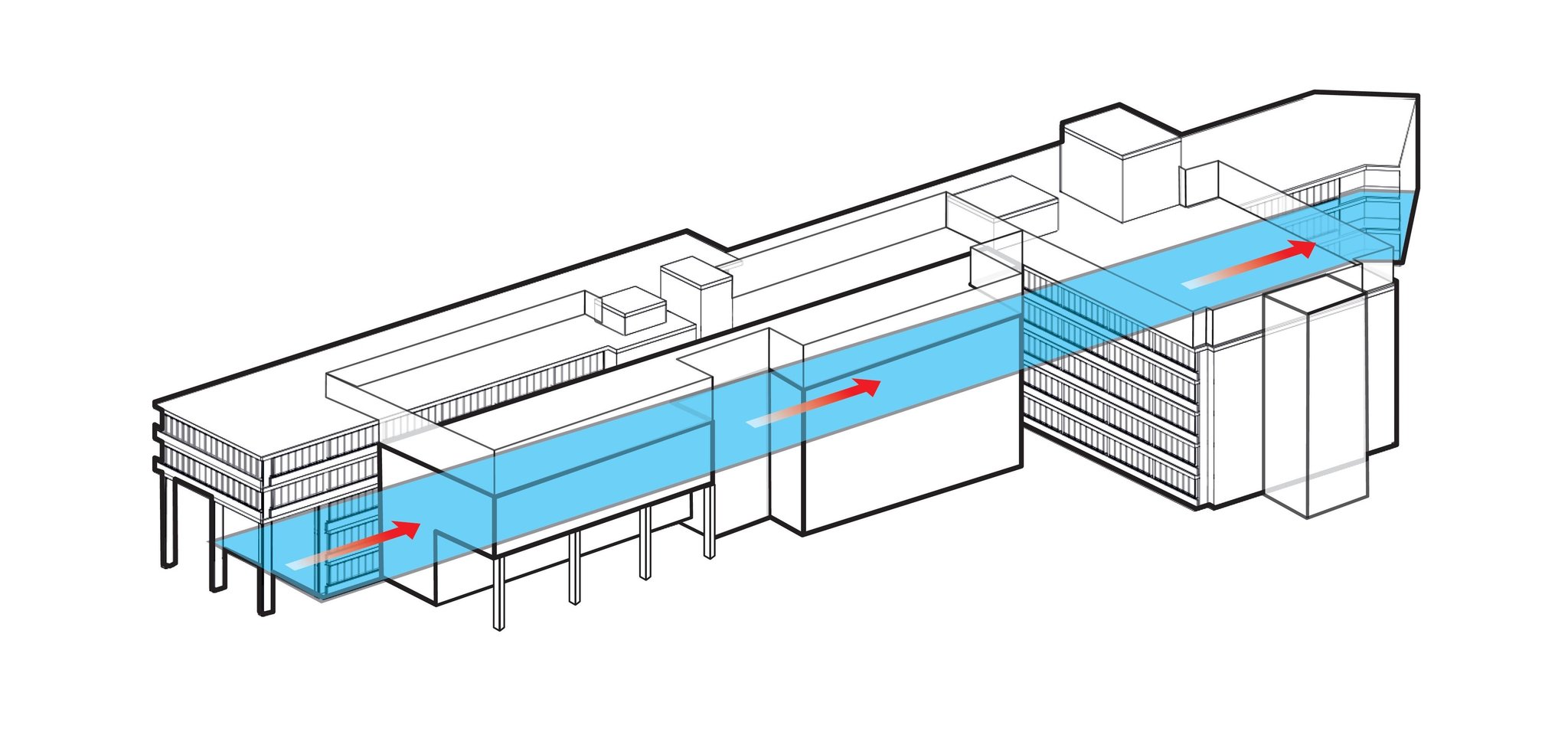
The proposal provides a new accessible entrance which is close to the main car park and adjacent to the east end of the existing building and Founders Green. This new entrance will make Building 3 more accessible
and enable future options for single-level access to the other buildings of the Lasdun Wall.


INTERNAL TEACHING CONCOURSE ACCESSIBLE

THROUGHOUT ENTIRE LASDUN WALL


North - East Axo : Proportions Diagram